|
Tuesday 9 November
Timing: 10:30-14:00
Due to earlier uncertainty with COVID our Annual Event will be run online again this year. Our key focus will be on 'net zero' solutions and we will report on the various decarbonisation initiatives that the sector, in particular the steel producers, have embarked upon.
Presentations will be made by: Severfield Plc, ArcelorMittal, Trimble and The Institution of Structural Engineers.
SCI will also reveal some new services and products which should help the UK steel construction sector meet its needs. These include Trimble TEDDs modules aimed at designers, the first three of which will be launched by the end of 2021.
Also hear more about our new service for assessing the thermal performance of details for light steel framing - we will present case studies of assessing performance in fire (as reported previously in Connect), and outline our plans to provide thermal modelling consultancy to assess temperature profiles and condensation risk.
To attend this free event register here
|
|
|
|
|
 |
Design for Construction - Member Webinar
12 October
12:30-13:30
|
|
|
Portal Frame Design - Online Course
4 Sessions: 20, 21, 27 & 28 October
10:00-12:00
|
|
|
SCI Annual Event 2021
9 November
10:30-14:00
|
|
|
View all courses
|
|
|
| SCI light steel frame Stage 1 certificates available for LABC Warranty and Premier Guarantee
|
|
Both LABC Warranty and Premier Guarantee have recently released new versions of their technical manuals. These manuals identify the Functional Requirements that are applicable to the design and construction of buildings to be covered by Warranties. The latest manuals incorporate numerous changes from the previous versions, however, of vital significance to the light steel framing sector is the implementation of SCI Stage 1 certificates specifically produced for the requirements of LABC Warranty and Premier Guarantee, and their technical manuals.
SCI has been reviewing systems and providing Stage 1 certificates for light steel framing systems that meet the necessary requirements for NHBC for 20+ years. There are currently over 30 companies which hold an SCI/NHBC Stage 1 certificate, the full list of companies is available on SCI Certification and Assessment website. These, and other, companies now have the opportunity to obtain equivalent certificates specifically for LABC Warranty and Premier Guarantee. There are some significant differences between the technical requirements for light steel framing of these companies and NHBC, some of which are obvious by a comparison of their technical manuals and the NHBC Standards, and some are more subtle.
Companies wanting to obtain Stage 1 certificates for LABC Warranty and Premier Guarantee should contact Andrew Way at SCI (a.way@steel-sci.com). After companies have successfully completed the process SCI will issue their certificates, provide company specific Stage 1 logos, notify LABC Warranty and Premier Guarantee and add the light steel framing system to the SCI Certification and Assessment website.
|


|
| SCI confirm Magnelis® corrosion performance
|
|
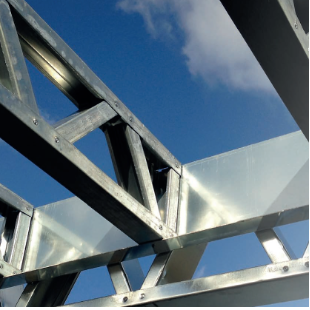
Metallic coating on thin gauge steel is commonly used to provide corrosion protection in a range of applications such as light steel framing, cladding sheets and purlins and rails in industrial buildings. The steel is manufactured to EN 10346:2015 and is continuously hot-dip coated. EN 10346:2015 includes a range of possible metallic coatings and thicknesses. The most commonly used corrosion protection on strip steel used in the UK and Ireland is Z275 zinc galvanising. However, some cold-formed steel product providers are considering using strip steel with the Magnelis® coating available from ArcelorMittal. The Magnelis® coating is a ZM (zinc aluminium magnesium) coating in accordance with EN 10346:2015.
The corrosion protection performance of Z275 is well understood and has been the widely researched, which is detailed in SCI publication P262 "Durability of Light Steel Framing in Residential Building - Second Edition". Z275 coating is also quoted as an acceptable corrosion protection in documents such as NHBC Standards Chapter 6.10 for Light Steel Framing.
The SCI has recently completed an independent review of the performance of the ArcelorMittal Magnelis® coating for corrosion protection. SCI was given access to extensive research carried out by ArcelorMittal.
Following the review, SCI's conclusions and recommendations are;
- Magnelis® ZM120 provides corrosion protection which is not less than the corrosion protection provided by Z275 coating.
- This conclusion applies to surface protection and to protection of cut edges.
- Magnelis® ZM120 is suitable for the same applications as the Z275 coating which is typically specified in UK and Irish construction.
- The design life predictions for the Z275 coating as stated in SCI publication P262 are also applicable to Magnelis® ZM120.
The scope of the performance review carried out by SCI focused on the corrosion protection performance of Magnelis®, other characteristics such as cost, environmental credentials, aesthetics and fabrication are not included.
The full details of the SCI review are included in SCI Report RT1892 which is available at https://industry.arcelormittal.com/scireviewsmagnelis
More information on Magnelis® is available at https://industry.arcelormittal.com/magnelis
If you are interested in an independent assessment of any of your products or services, or just for more information please contact assessment@steel-sci.com.
|

|
| Members Advisory Desk Service email alerts.
|
|
The new Advisory Desk service emails sent this month included;
Advisory Desk Note - AD 405
Vibration assessment of transient response factors
Advisory Desk Note - AD 472
Design Loads for splices in columns continuous through transfer structures
If you are an SCI Sole Trader or Corporate Member and not receiving these email alerts go to the SCI Information Portal and in your Profile click on notifications/alerts and select the notifications you require.
All the Advisory Desk Notes and Questions and Answers together with other technical resources are all available at all times on the SCI Information Portal.
|
 |
| SCI Advisory Questions and Answers
|
|
For SCI Sole Trader and Corporate members, SCI offers support through our Advisory Desk Service. For questions asked which we feel are pertinent to the wider member audience we publish anonymously the questions and answers.
Where some questions relate to SCI Publications we publish the question and answers in Connect.
This month our published question is about;
Variable load reductions
Question: A column carrying three floors supports office loading at levels 1 and 2 and plant loading at level 3. In accordance with
BS EN 1991-1-1 clause 6.3.1.2 (10) and (11), a reduction factor may be applied to the areas supporting office loads and the load in the columns due to the office loading. The variable load on the plant floor cannot be reduced, as this falls outside Categories A to D of Table 6.2. The UK NA provides alternative expressions for the two reduction factors in NA.2.5 and NA.2.6. When calculating the reduction factor for imposed loads from several storeys in accordance with NA.2.6, how many storeys may be considered when calculating the load in the
column from ground to the first floor?
Please see the answer to this Advisory Question/Answer - Ref No AD_QA_7162-21 and all Advisory questions on the SCI Information Portal.
The Advisory Desk Service is for SCI Corporate and Sole Trader Members
advisory@steel-sci.com | +44 (0) 1344 636525
|
|
| SCI Courses, Webinars and Events
|
|
SCI Online Training Courses
Our public courses and webinars keep engineers updated with the latest developments within steel design and equip them to design competently, efficiently and safely.
Our next course in October is:
|
|
|
Portal Frame Design - Online Course
Delivered in 4 sessions:
Part 1: 20 October 21
Part 2: 21 October 21
Part 3: 27 October 21
Part 4: 28 October 21
Each session will run from 10:00-12:00 (BST)
The course aims to provide in-depth coverage of the major issues surrounding the analysis, design and (crucially) the detailing of portal frames. The course covers frame design to
BS EN 1993-1-1.
The course assumes that bespoke software will be used in many designs, but aims to present the background structural mechanics so the principles are understood, such that a manual design could be completed.
Having attended this course you will be able to:
- Properly assess the loading on a portal frame structure;
- Understand the underlying principles of portal frames;
- Confidently check the analysis, design and details of a portal structure.
Member Rate - £250.00
SCI Non-Member - £330.00
Register for this event here.
|
 |
|
Next SCI Member webinar is;
Design for construction
Webinar - 12 October 21
Time: 12:30-13:30
It is important that designers remember that buildings don't just 'appear', they need to be constructed and that may result in temporary conditions that are more onerous than the final condition. Proper consideration at an early stage of how a building will, or can, be constructed can save money, effort and indeed improve health and safety.
Examples will be given to illustrate how these benefits can be achieved.
Free to Corporate and Sole Trader members to view.
Register here to view this webinar
For a list of webinars and on-line public courses visit the
SCI Information Portal
Or contact education@steel-sci.com to discuss your requirements.
|
 |
|
|
|
|
|
Members in the news |
|
Fabsec's new partnership with Bentley Systems Inc. has synchronised FBEAM and Bentley's RAM Structural System
It's estimated that over 70% of all multi-storey buildings use steel framed structures as their preferred method of construction. Cellular beams have long complimented this preference and are an established design solution incorporated by engineers and building contractors alike.
Fabsec's new partnership with Bentley Systems Inc. has synchronised FBEAM and Bentley's RAM Structural System, further enhancing the interoperability functions within the FBEAM software. The update provides an import / export feature that allows seamless transfer of data, increasing productivity whilst de-risking the handling of design data. RAM states:
The RAM Structural System allows rapid creation of the entire structural model, including the floor and roof framing and loads. It determines the distribution of those design loads to the members, including the consideration of the code-allowed reduction of imposed loads. Those geometries and design loads can then be transferred directly to FBEAM to enhance the efficiencies of the design in ambient and fire conditions. Because of the automation, any subsequent changes in framing can be quickly and easily accommodated.
Intuitive design software not only improves engineers' workflows, making them more efficient, it also encourages them to explore any number of options surrounding the design, all of which can be reviewed easily. Fabsec FBEAM® software is free to use in the UK to design primary and secondary floor beams, as well as rafters.
With margins in industry already lean, FBEAM automation can facilitate the assessment of multiple plated cellular beams. FBEAM can either optimise for minimum weight or take a holistic view considering the cost of the Firetex intumescent paint as well as the raw materials associated with the plate girder, ensuring that the most economic, sustainable, beam design is realised.
There are many more benefits to engineers using Fabsec products and the FBEAM software:
- Spans of up to 25m for floor beams and 60m for rafters
- Section depth can be varied to optimise span / depth efficiency
- Increasing the span can result in fewer pieces to fabricate & erect as well as improving the buildings flexibility and longevity.
- The ability to allocate material where required leads to leaner, more sustainable designs
- Full flexibility of beam depths to align with building / planning parameters
- Enhanced range of sections to standard rolled UB's / UC's
- Full flexibility on service penetrations through the profile's web, avoiding additional handling requirements associated with infills or web stiffening.


To realise the benefits above you can download the latest version from www.fabsec.co.uk. Should you require any introduction to the software / ongoing support queries you can contact our free technical advisory service at support@fabsec.co.uk.
|


|
|
SCI Publications
Our bookshop is once again open. For any hard copies of SCI Publications visit the SCI WebShop.
|
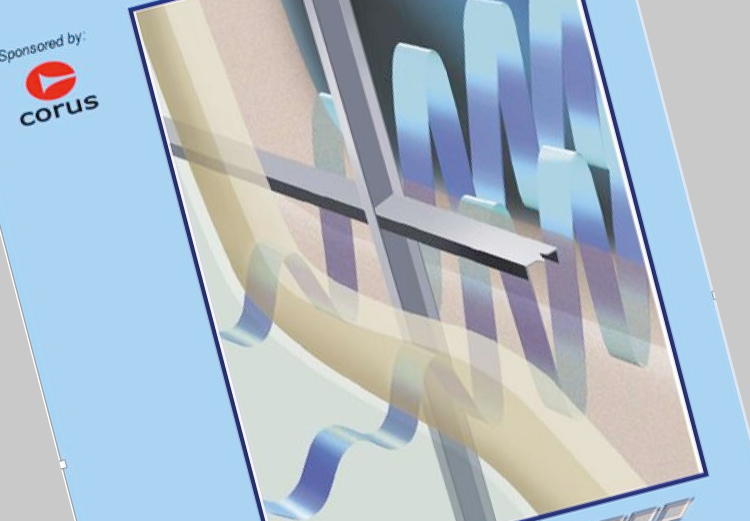
Acoustic detailing for Steel Construction (P372)
This publication gives acoustic details for steel framed buildings with a range of floor and wall constructions. The guidance is based on acoustic test results and information published by manufacturers and suppliers of plasterboard, light steel framing, acoustic systems and associated products.
|
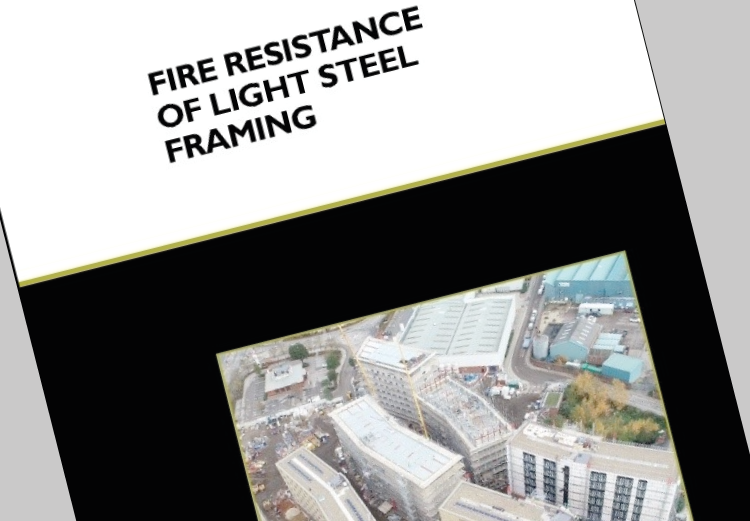
Fire Resistance of Light Steel Framing (P424)
This New publication provides guidance on how light steel framed buildings should be designed and detailed to provide fire resistance in accordance with the Building Regulations. The guidance addresses the criteria that need to be considered and explains how these can be achieved with light steel framing.
|
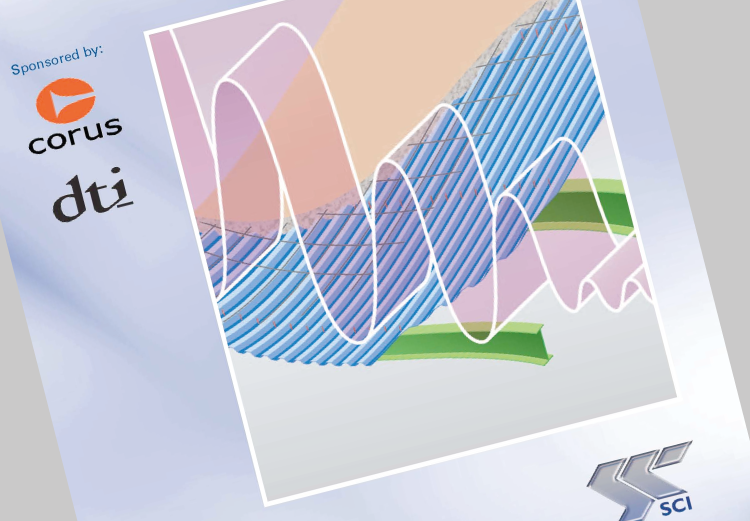
Design of Floors for vibration. A new approach -2009 (P354)
This publication presents guidance for assessing the vibration behaviour of floors in steel framed buildings caused by pedestrian traffic. It has particular relevance to composite floors. It describes the phenomenon in both general and technical terms, contains a background commentary and specific design recommendations.
|
|
|
|
|
|
|
|
SCI on Social Media
For course reminders, publication updates and article notifications follow SCI on Twitter, Instagram and LinkedIn.
|
|
|
|
|
|
Refer a friend or colleague who you think may be interested in receiving the SCI Connect Newsletter
|
|
|
CLICK TO REGISTER
|
|
|
|
|
© 2021. This newsletter has been published by The Steel Construction Institute |
Terms
Privacy Policy
|
|
The Steel Construction Institute, Silwood Park, Ascot. SL5 7QN.
Registered in England and Wales. Registered No: 1916698.
Click here to unsubscribe
|
|