|
June will see us host the first of our Round Tables. We will be bringing together an architect, structural engineers, a steel producer, a main contractor, a steelwork contractor, a steel section stockholder and, last but not least, a steel product manufacturer. We will be discussing 'How are considerations of the embodied carbon in a structure affecting your business today, and how do you think regulatory enforcement would further affect things?' It is clear that the issue of embodied carbon is a massive one for construction, indeed for the future of the world (without wishing to be over dramatic). It is clear that there are some key things that could be done to lower the embodied carbon associated with steel structures. Steel offers a lot of potential, but it is also clear that turning some of the great ideas into practice will be very challenging indeed - such as encouraging designers to choose 'pre-loved' steel sections when they have no idea what sections will be available (or how they would find them) when the time comes for construction. Not only that, but knowing that if the section that is available at the time is more than 20% heavier than needed then it would make more sense to recycle that section than reuse it. Challenges indeed.
But engineers are by name ingenious, so we can and must find solutions. Just before writing this I was amused to read in an article about demolition that 'previously developers have been encouraged to knock down..., more recently Government has agreed with engineers who argued that replacement was bad'. Government listening to experts, what next?
So later this month we hope to get some useful insights from the body of experts we have established. We will in due course publish key findings, and would like to include in those findings inputs from a broader cohort. So if you have an opinion on this subject that you would be happy to share, please don't hesitate to contact us.
|
|
|
|
|
 |
Steel Frame Stability - Online Course
8 & 9 June
10:00-12:00
|
|
|
Modular Construction - Member Webinar
14 June
12:30-13:30
|
|
|
Steel Frames & Disproportionate Collapse Rules
11, 12 & 15 July
10:00-12:00
|
|
|
Cold Formed Portal Frames - Member Webinar
12 July
12:30-13:30
|
|
|
View all courses
|
|
|
| Final Report available - STROBE (Stronger Steels in the Built Environment)
|
|
The final report of the European research project STROBE (Stronger Steels in the Built Environment) is now available. The project developed cost-efficient design rules for HSS structures, focussing on ductility, plastic design, stability and the dynamics of floor systems.
Four webinars were held to inform engineers how to design HSS in accordance with current European practice, as well as cover brand new developments in design guidance arising from the STROBE project. An SCI Publication: High Strength Steel Design and Execution Guide (P432) was also produced.
Partners in the STROBE project include RWTH Aachen (Germany), Imperial College London (UK), University of Coimbra (Portugal), Dillinger (Germany), Hochtief Engineering GmbH Consult IKS (Germany) and SCI (Co-ordinator).
All resources including the final report, presentations and recordings of the webinars and a free download of the Publication can be found here.
Contact Nancy Baddoo for further information.
|

|
| Nickel Institute Presentation
|
|
On the 14th April 2022 Nancy Baddoo was invited by the Nickel Institute to make a presentation in coordination with CADE (China Architectural Design Expo). 9000 attendees listened to the presentation.
|

|
| Next Generation of Eurocodes
|
|
Thank you to those of you who made comments on the next generation of Eurocodes.
|

|
| Newly Certified in Light Steel Framing
|
|
The NHBC Standards Chapter 6.10 for light steel framing require manufacturers of light steel frame systems to obtain SCI/NHBC Stage 1 certification from the SCI. This is a prerequisite for obtaining an NHBC Warranty for a light steel frame building.
The certification process is applicable to light steel frame systems which are designed to form the primary structural frame of a building. The system supplier submits a system manual and supporting technical information to SCI for assessment in accordance with Chapter 6.10 of NHBC Standards.
Over the years many companies have achieved SCI/NHBC Stage 1 Certification with the current list of certified systems now exceeding 40, the full list is available here.
The three most recent companies to join the list of certified systems are:
For more information on SCI/NHBC Stage 1 certification from the SCI please visit the website or contact assessment@steel-sci.com.
|


|
| Members Advisory Desk Service email alerts.
|
|
The new Advisory Desk service emails sent this month included;
Advisory Desk Note - AD 395
Nominally pinned connections and axial forces
Advisory Desk Note - AD 487
Correction to EN 1993-1-3
If you are an SCI Sole Trader or Corporate Member and not receiving these email alerts go to the SCI Information Portal and in your Profile click on notifications/alerts and select the notifications you require.
All the Advisory Desk Notes and Questions and Answers together with other technical resources are all available at all times on the SCI Information Portal.
|
 |
| SCI Advisory Questions and Answers
|
|
For SCI Sole Trader and Corporate members, SCI offers support through our Advisory Desk Service. For questions asked which we feel are pertinent to the wider member audience we publish anonymously the questions and answers.
Where some questions relate to SCI Publications we publish the question and answers in Connect.
This month our published question is about;
Location of hinges in plastice design of Multi-storey frame
Question: In plastic design of multi-storey frames is it preferable to ensure the plastic hinges form in beams not columns?
Answer: Yes. Plastic hinges in plastically designed multi-storey frames should not be allowed to form in columns.
This is Advisory Question/Answer Ref No: 7170-22
For all other membership Advisory Question /Answers please visit the the SCI Information Portal.
The Advisory Desk Service is for SCI Corporate and Sole Trader Members
advisory@steel-sci.com | +44 (0) 1344 636525
|
|
| SCI Courses, Webinars and Events
|
|
SCI Online Training Courses
Our public courses and webinars keep engineers updated with the latest developments within steel design and equip them to design competently, efficiently and safely.
|
|
|
Steel Frame Stability Course
This course will be delivered in 2 Sessions:
Part 1 - 8th June
Part 2 - 9th June
Timing: 10:00-12:00
This course will demonstrate that second-order effects are always present, and how they are managed in design.
Starting with members and then moving on to entire frames, the course will review the behaviour being assessed, and how this is covered in the design standards. The design of braced frames and portal frames will form the core of the course.
Member Rate: £160.00 +VAT
Non Member Rate: £190.00 +VAT
To attend thise register here
|
 |
|
Next SCI Member webinar is;
Modular Construction
14 June 22
Time: 12:30-13:30
This webinar will cover the various forms of modular construction and examples of projects in the residential, health and educational sectors. It will cover developments in high-rise modular buildings and hybrid steel frames and modules.
Register for this event here
|
 |
|
Members in the news |
|
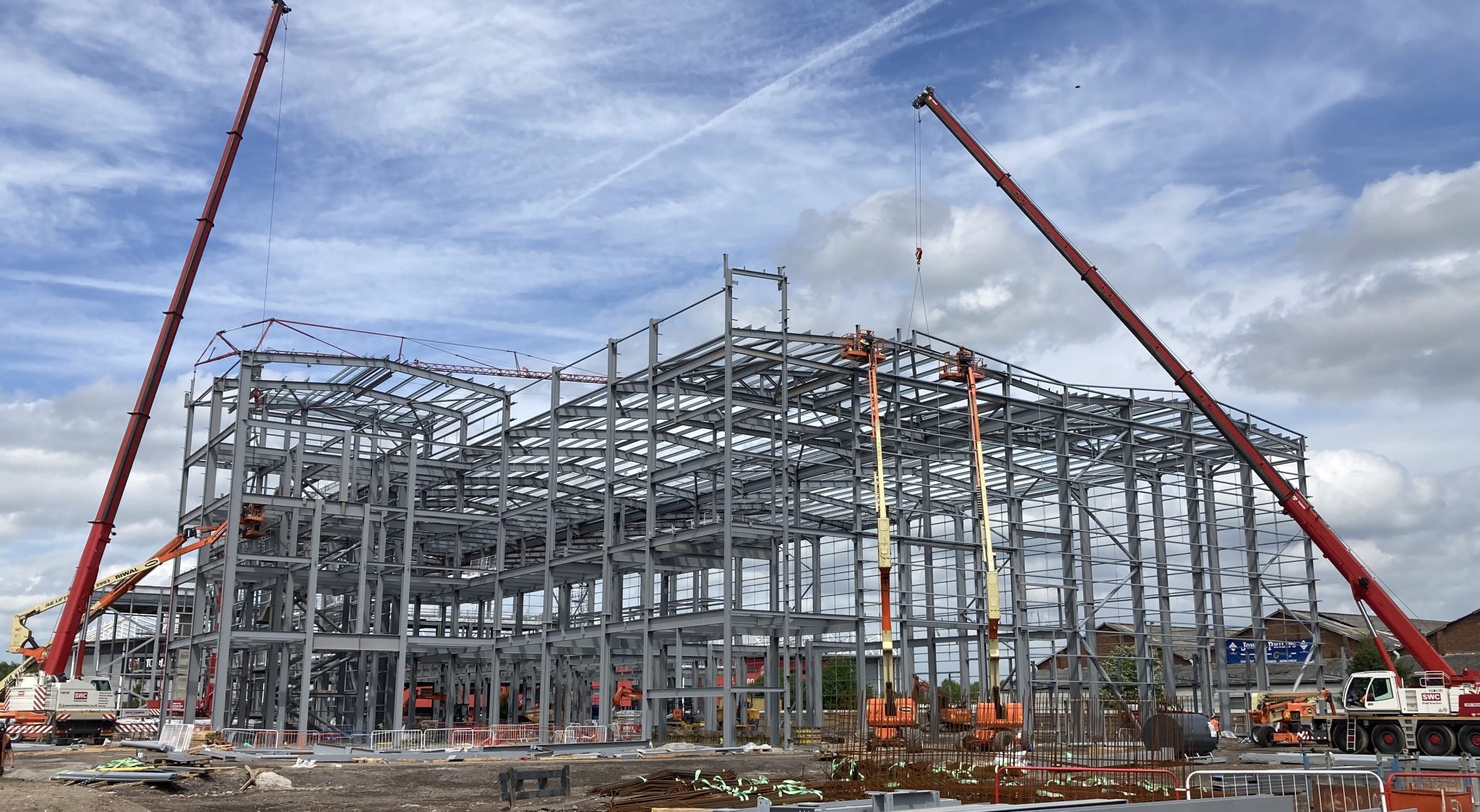
Caunton Engineering awarded contract with Bowmer and Kirkland
Caunton Engineering are most pleased to have been awarded the contract for the steel-framing for structures within a new pioneering glass research and innovation facility in St Helens by main contractor Bowmer and Kirkland. It will occupy a site with links to the historic glass industry for which the town is famed. Steelwork erection has now commenced. The 15,300m2 transformational global glass research and innovation facility is reported to complete in January 2023, ready for internal fit-out.
This state-of-the-art facility, Global Centre of Excellence, will be the world's first openly accessible test and trial furnace operation. Glass Futures will occupy and manage the building to deliver industry and government-backed research and development projects focused on decarbonising glass production. It will also provide a platform for the industry to access an experimental scale furnace to test and run trials for implementation at commercial scale on a state-of-the-art line, both collaboratively and individually.
Caunton will be supplying and erecting over 1400te of steelwork designed by consulting engineer Tetra Tech and architect AEW Architects. The Caunton technical team will be designing the connections. Caunton are delighted to be involved with such an exciting project.
|

|
|
SCI Publications
Our bookshop is once again open. For any hard copies of SCI Publications visit the SCI WebShop.
|
Acoustic detailing for Steel Construction (P372)
This publication gives acoustic details for steel framed buildings with a range of floor and wall constructions. The guidance is based on acoustic test results and information published by manufacturers and suppliers of plasterboard, light steel framing, acoustic systems and associated product
|
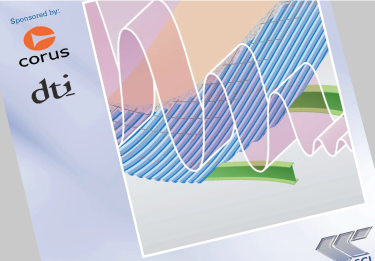
Design of Floors for vibration. A new approach - revised edition (P354)
This publication presents guidance for assessing the vibration behaviour of floors in steel framed buildings caused by pedestrian traffic. It has particular relevance to composite floors. It describes the phenomenon in both general and technical terms, contains a background commentary and specific design recommendation
|
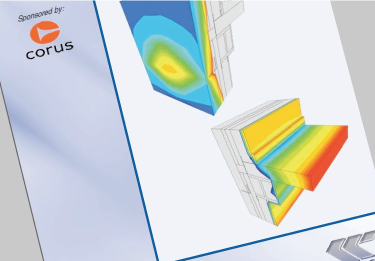
Avoidance of Thermal bridging in steel - P380
This publication provides an introduction to thermal bridging, an explanation of the consequences of thermal bridging (local heat loss and the possibility of condensation), and describes how these effects are considered in building regulations. Different methods for minimising thermal bridges in steel construction are described and examples to demonstrate the different methods are presented.
|
|
|
|
|
|
|
|
SCI on Social Media
For course reminders, publication updates and article notifications follow SCI on Twitter, Instagram and LinkedIn.
|
|
|
|
|
|
Refer a friend or colleague who you think may be interested in receiving the SCI Connect Newsletter
|
|
|
CLICK TO REGISTER
|
|
|
|
|
© 2022. This newsletter has been published by The Steel Construction Institute |
Terms
Privacy Policy
|
|
The Steel Construction Institute, Silwood Park, Ascot. SL5 7QN.
Registered in England and Wales. Registered No: 1916698.
Click here to unsubscribe
|
|