Structural steel reuse; environmental and economic
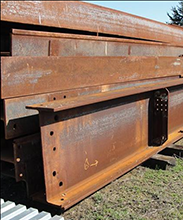
SCI has recently completed two Innovate UK projects exploring the opportunities for steel and the circular economy focussing particularly on structural steel reuse.
Working together with the University of Cambridge, we have explored why steel reuse isn’t more commonplace and what steps could be taken to change this.
Reusing, as opposed to the current practice of recycling by remelting, makes good environmental sense, saving significant carbon emissions. It also retains more economic activity within the UK since currently around 70% of steel scrap is exported.
Our research has found many technical barriers to steel reuse throughout the supply chain. None of these is insurmountable but additional cost and programme, compared to using new steel, can be significant. Our cost assessment shows that the differential between the average price of new and scrap structural steel over the last 16 years is over £300 per tonne; there is certainly an opportunity for the right business model. What is missing is any real legislative push to incentivise steel reuse.
As part of our work we have developed a prototype website to trade reclaimed structural steel. We have also looked to the future and explored how we can upload, store and retrieve structural steel BIM models to facilitate future renovation and reuse of steel buildings. This represents a great opportunity for the steel construction sector and something we should do.
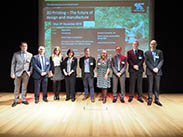
We disseminated our findings at an event at the Building Centre in London in November and are continuing our work on steel reuse and design for deconstruction, through the EU-funded project REDUCE which will run until 2019. |
|
| |
Innovate UK – Manufacturing and Materials
Grant funding is often overlooked, however schemes are available that will fund development projects from technical/market feasibility to pre-commercial validation. Manufacturing and Materials is one of Innovate UK’s priority areas and has a bi-annual competition to fund projects from this sector. A total budget of £15m has been made available to fund a large portfolio of projects of different sizes and maturities.
The scheme supports UK based organisations to conduct R&D leading to innovation. Projects must cover at least one of the following areas:
• Innovation in a manufacturing system, technology, process or business model.
• Innovation in materials development, properties, integration or reuse.
Applications are particularly encouraged where this innovation can be applied to more than one sector. Projects should last between 6 months and 3 years, with £50k-£2m of grant available (funded up to 70% of total cost). Projects must be led by a UK-based business of any size, working alone or in collaboration with other commercial, research and/or third sector organisations.
Registration Deadline: 18 January 2017
Application Deadline: 25 January 2017
If this competition is not suitable, Innovate UK also have their Open Programme, which funds R&D/innovation projects from any sector involving any technology.
For help with the qualification of project ideas for alignment against these schemes, or for further information on our flexible writing support, please contact PNO on 0161 488 3488, or email james.hughes@pnoconsultants.com |

|
| |
| |
The rise and rise of light steel framing
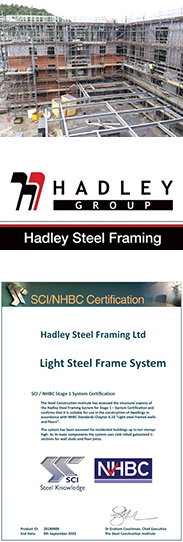
Regular readers of SCI Connect will know that alongside its 'SCI Assessed' scheme, the SCI provides a specific scheme for light steel framing systems which is operated in conjunction with NHBC. The SCI/NHBC Stage 1 System Certification scheme ensures that light steel framing systems are designed in accordance to the relevant codes and standards, and the NHBC Standards Chapter 6.10 - Light Steel Framed Walls and Floors.
Over recent months the demand from new applicants for SCI/NHBC Stage 1 System Certification has been higher than ever. This is excellent news for the light steel sector and it demonstrates that the advantages of these systems are being recognised more widely. It is also a likely reflection on the growing interest and support for modern methods of construction / offsite construction / design for manufacture and assembly, and the accepted increasing demand for more housing. These messages are highlighted in The Farmer Review of the UK Construction Labour Model.
Light steel framing systems are suitable for both traditional low-rising housing and also multi-storey multi-occupancy developments. More information about light steel framing and modular construction is provided on the Light Steel Forum website.
Hadley Steel Framing Ltd are the latest company to renew their SCI/NHBC Stage 1 System Certification. The Hadley system has been assessed for residential buildings up to 10 storeys. |
|
| |
SCI Assessed for Mezzanine7®
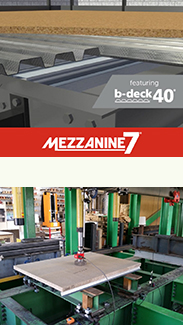
Mezzanine International, in conjunction with SCI, have developed and tested a high-performance mezzanine floor system - Mezzanine7®. The floor system consists of options for various types of timber-based decking supported on bdeck40®, a profiled steel floor deck featuring UltraSteel®, supported on hot and cold-rolled steel beams.
A comprehensive programme of structural testing was carried out to enable SCI to determine design resistance values for the floor system. Point load testing and distributed load testing has been undertaken on two types of particle board. Further testing and analysis is currently in progress to consider the floor performance with an extended range of floor boarding options.
The SCI has analysed the results of the testing in accordance with Eurocode 3, BS EN 1993-1-3:2006 and determined characteristic values and design values for the different combinations of timber boarding and bdeck40®. The design values have been used to produce load/span tables for the Mezzanine7® floor system considering point loads and distributed load for a range of deflection criteria.
The design data for Mezzanine7® is covered by the SCI Assessed verification scheme. More information about SCI Assessed is provided on the SCI Assessed website.
|
|
|
| |
Blind Bolts across the pond
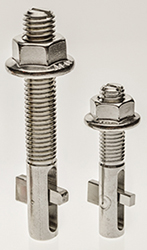
SCI has just completed a further project for Blind Bolts, calculating bolt resistances for use in the United States. In the US, design may be completed to a Permissible Stress code (ASD) or to a Limit State Code (LRFD), so resistances appropriate for both approaches have been calculated. The US uses imperial units, so familiar metric diameters are presented in inches, and resistance values in kips. For interest, there are 4.45 kips in a kN.
Blind Bolts are used for connections to hollow sections and other situations where access is only possible from one side. The data prepared in this project should support the specification of these fixings in the US, where there is considerable interest in the fixings.
|
|
| |
Your innovation might be worth more than you realise
Are you developing new products, processes or services to disrupt the steel construction sector?
You could get a cash payment to support your businesses’ exciting development plans using the government’s research and development (R&D) tax credit incentive.
SMEs can recoup up to 33p of every £1 spent. The average claim made by an SME is now £54,214 (HMRC R&D tax credits statistics 2016).
Moreover, ForrestBrown’s recent survey of UK businesses shows the definition of research and development itself might be holding firms back.
ForrestBrown is an award-winning R&D tax credit specialist, and will hold a webinar on Thursday 19 January 2017, 12.30 – 13.15 exclusively for members of the Steel Construction Institute to explain how the steel construction sector can make its innovation pay.
The webinar will explain the opportunity R&D tax credits present to and how to go about making a claim. You will learn how to:
• identify innovation for the purposes of R&D tax credits;
• identify qualifying activities and costs; and,
• create a robust methodology.
To register, please contact education@steel-sci.com.
|

|
| |
SCI Vacancy
WPF Developer
Full time fixed term appointment with possible transfer to permanent status
We are currently seeking an experienced WPF developer to work closely with our lead developer and structural engineers on bespoke engineering applications and other software development.
This is initially a fixed term appointment of 12 months but depending on future work growth in this area, there is a possibility of extension or a transfer to permanent employee status. The role is based at our Ascot office.
For more details go to our website.
|

|
|
| |
SCI People
Ibrahim Fahdah, Software Architect and Developer, SCI
Ibrahim graduated in civil engineering from Damascus University, Syria and then from the University of Nottingham where he completed his doctorate in the field of Computing in Civil Engineering.
In 2008 Ibrahim worked for SCI as part of the Knowledge Transfer Partnerships program between Imperial College and SCI. After working on a contractual basis for the Offshore Department at the SCI, Ibrahim joined SCI in 2014 as a software architect and developer.
Ibrahim’s skills include; Software development, Finite Element Analysis, Structural engineering modelling and Building Information modelling. He has worked many of the SCI’s software programmes including the development of the Cellbeam suite.
|
 |
|
SCI Publications
|
 |
 |
 |
Thermal bridging in steel construction (P410) This publication provides an introduction to thermal bridging, an explanation of the consequences of thermal bridging and describes how these effects are considered and quantified in the UK Building Regulations. |
Thermal bridging in light steel framing and modular construction (P411) This publication includes results from thermal analysis models for common construction details used in Light steel framing and modular construction. |
Design of steel portal frame buildings to Eurocode 3 (P399) This publication provides guidance for the elastic and plastic design of portal frames in the UK in accordance with the Eurocodes and their National Annexes. |
|
|
|
|
| |
| |
SCI New Members
SCI would like to welcome new member;
Euroclad
Corbett & Tasker Ltd
Universal Steel Fabrication
Steve Gilmour Design Ltd
|

|
| |
| |
SCI Members in the News
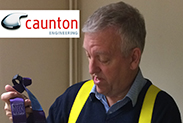
Caunton Senior Manager contributes to St Gobain Safety Event
Saint-Gobain the world renowned glass maker held an International Safety day recently at its Celotex site near Goole. Barry Thompson, Caunton Engineering’s SHE manager was invited to be an important part of the training team, and presented a “working at height” session to those attending.
|
|
| |
|
|
|
| |
| |
Twitter Suggestion
For course reminders, publication updates and article notifications follow SCI on Twitter.
|
Connect Sign Up |
Refer a friend or colleague who you think may be interested in receiving the SCI Connect Newsletter |
| CLICK TO REGISTER |
|
| |
© 2016. This newsletter has been published by The Steel Construction Institute Terms | Privacy Policy |
The Steel Construction Institute, Silwood Park, Ascot. SL5 7QN. Registered in England and Wales. Registered No: 1916698.
We are limited by guarantee. |