SCI is proud to announce the launch of the ArcelorMittal Orange Book website
The Orange Book was formally launched at a joint ArcelorMittal-SCI event at the ArcelorMittal Orbit on 27th September. SCI has produced design data for structural steelwork, both in hardcopy and electronic form, for over 30 years. Over this time our design data has evolved to take into account feedback from users and changing information technologies. The Orange Book represents the next evolution of our work.
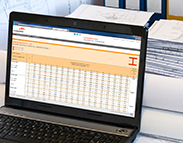
The Orange Book provides comprehensive tables of member resistances for S355/HISTAR355 and S460/HISTAR460 steel to enable rapid selection of steel members in compression, bending and tension. Tables are also provided for combined bending and compression, web resistance and shear resistance. The design data have been derived in accordance with Eurocode 3 and their UK National Annexes. Full explanatory notes are provided.
HISTAR steels are structural grades with a low alloy content, combining high strength, good toughness and superior weldability. HISTAR grades are delivered in accordance with the European Technical Assessment ETA-10/0156 and are available with minimum yield strengths of 355 or 460 MPa. When compared to standard structural steels, HISTAR grades feature improved guaranteed mechanical characteristics.
In addition to universal sections, the Orange Book provides data on the full range of European sections offered by ArcelorMittal including:
• European beams: IPE, HE, HL and HLZ
• European columns: HD
• European bearing piles: HP
• European channels: UPE and UPN
• European angles: L (equal and unequal, including back-to-back angles)
Users of the website are able to print the tables and easily export the data into MS Excel.
Although presentation of the data has evolved and been improved over the years, users of the Orange Book can be confident that the data has been produced by SCI with the same technical rigour and accuracy for which we are renowned.
You can access the ArcelorMittal Orange Book here. |
|
| |
Why Steel in Construction
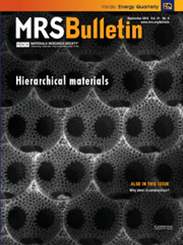
Timber, Steel, and Concrete form the triumvirate of structural materials used in construction. Each material possesses particular attributes. With cost and ease of use often providing the determining factor in selection when structural requirements are equal. This article aims to provide insight into the unique capabilities that steel can offer in Construction. Beginning with the advent of the Industrial Revolution, developments in alloy chemistry, impurity control, and thermomechanical processing to produce different geometries have continued to make steel an attractive choice in residential and commercial construction. Changing demographics and the needs of future cities are discussed in terms of steel construction members, construction strategies and functional coatings.
Barbara Shollock, Digvijay Thakur, and Graham Couchman Read the full article in MRS Bulletin. |
|
| |
Russian Steel Development Association - first student steel design competition in Russia
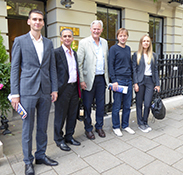
Earlier this year, the Steel Construction Development Association, SCDA (Moscow), an SCI Member, organised the first Steel2Real ’16 competition. The purpose of the competition is to encourage upcoming architects and engineers to learn more about and gain confidence in design in steel. The scope of this year’s competition (which will now run annually) was the design of a multi-storey residential building as part of a pre-defined masterplan. The two prize winners were treated to a visit to London this September, accompanied by the Association’s Head of Engineering Department, Alexey Yakovlev. As part of this visit, they were introduced to the work of SCI and attended presentations on best practice in composite construction and use of steel in residential buildings. They also visited a number of landmark steel framed buildings and current high rise steel construction projects in London.
SCDA was established in 2014 following a series of consultations with Russian industry and advice from SCI. It is a member organisation with membership that spans the steel construction supply chain. Its aim is to encourage the greater use of steel through engineering services to help convert projects from concrete to steel, scientific and educational activity and through contributing to regulations and standards. |
|
|
| |
Structures in Fire Forum (STIFF)
SCI partly sponsors this discussion group, which – as the name implies – is interested in the behaviour of all types of structure under the influence of fire. The scope of the forum is not limited to the behaviour of the structure, but includes the development and control of fires, fire safety engineering and developments in design codes. Meeting twice a year, the forum generally covers a diverse range of topics, which might include analysis, physical testing of structures, fire protection products and software development. Researchers or practitioners interested in subject area are encouraged to attend and contribute. Contact the forum chair Dr David Rush, or look at the information at www.structuresinfireforum.com.
|

|
|
| |
SCI Annual Event
3D printing – the future of design and manufacture?
Wednesday, 9th November 2016, the National Gallery, London
Printing a bridge in steel and revolutionising the way steel-framed buildings are fabricated and erected by exploiting additive manufacturing. Do these examples show us the way forward for pioneering developments in structural engineering?
Listen to a case study on how multi-axis robots with 3D tools and developed software allows 3D printing from a large bridge to a small parts, hear how UK research is investigating how additive manufacturing could revolutionise the design and fabrication of steel joints. Learn how end-to-end simulation-driven solutions have been developed for addressing key challenges that industry faces.
Presentations at the SCI Annual event include;
• The MX3D bridge project in Amsterdam – Olivier Vassart, General Manager, ArcelorMittal Global R&D
• Additive Manufacture – Iain Todd, Sheffield University
• Simulation Driven Additive Manufacturing; New technology from SIMULIA-Abaqus – Auday Alrawe, Business Development Manager, Intrinsys
• Recent research projects from SCI, Various presenters
To register for this free event contact: scievents@steel-sci.com.
|

|
| |
Comfortable Living Ltd
Comfortable Living Limited have achieved SCI/NHBC Certification for their light steel framing system. The certification confirms that the Comfortable Living design process and standard construction details are in accordance with NHBC Standards Chapter 6.10 for Light Steel Walls and Floors. The building system is certified for low-rise residential buildings up to three storeys. All structural design for the system is in accordance with BS EN 1993-1-1 for cold formed members and other relevant parts of the Eurocodes. Further details are provided on the SCI Assessed website. |

|
| |
SCI People
Ed Yandzio, Principal Engineer
Ed has worked at SCI for 27 years and has obtained varied engineering design, management and construction experience, and been involved in design of commercial computer programs for engineering and business applications. Prior to joining SCI 10 years were spent in the oil and gas industry. He is currently involved in the development and innovation of building envelopes to Eurocodes for single storey buildings.
Ed is an author of numerous SCI publications which provide guidance relating to steel design of buildings, integral bridges and foundations.
Contact Ed.
01344 636525
|
 |
| |
| |
SCI Publications |
.jpg) |
.jpg) |
.jpg) |
Steel building design: Introduction to the Eurocodes (P361) For designers using the Eurocodes for the first time, this publication offers an overview of the Eurocode standards and the national annexes that implement them. |
Steel building design: Concise Eurocodes (P362) This guide cuts through the apparent complexity of the Eurocodes for steel design, and provides the designer with a digestible approach to common tasks. |
Steel building design: Worked examples for students (P387) This easy-to-read publication provides a concise overview of steel design to the Eurocodes. |
|
|
|
|
|
Lindapter provided connection solutions for Arup’s Circular Economy Building
The construction industry currently produces three times more waste than all UK households combined, including 60 tonnes of materials that go straight to the tip due to incorrect ordering, damage or not fitting correctly. Lindapter and many other collaborators pulled together, generously giving their time, products and services to support Arup’s project, which tested the maturity of circular economy thinking in order to prove that circularity is achievable.
|