
The past, present and future of steel construction
The 12th of November saw over 100 delegates arrive at The Crystal in London for SCI’s Annual Event. Many of those delegates completed their journey using the Emirates Cable Car, which seemed a fitting way to travel. The theme for the event, planned many months ago, seemed particularly topical as headlines about UK steel producers began to appear in the national press in recent weeks.
SCI’s Graham Couchman began the presentations, looking back at parallel streams of how SCI has evolved over the 30 years since its creation, and how the UK steel construction sector has changed. Reference was made to such landmarks as the Eurocodes, the construction of nuclear power stations, and SCI publications including the Blue and Green Books.
Mike Walsh from Hatch Ltd then spoke about steel production and demand. He considered various ways of predicting future global demand, all of which suggested the future is very bright for global steel producers. He noted the forecast population increases in the ‘next 20’ group of countries (a disparate grouping). Based on the assumption that human aspiration will not change, and that aspiration is associated with steel use for infrastructure and goods, the need for steel is high. He also looked at how the way we make steel has evolved, how that will affect the future, and indeed the global need for scrap.
Carl Perry from BlueScope placed an emphasis on construction products and processes, rather than steel production and consumption. He considered when market needs lead technology, and technology enables innovative solutions. He identified that the on-going trend will be for lighter steel products, made using higher strength steels, and gave particular consideration to novel coatings. In terms of process he demonstrated cases where working at height has been completely eliminated from site practice.
During the closing Q&A session the need to differentiate between UK steel production, and the UK steel construction sector, which is currently vibrant, was emphasised.
SCI Courses |
|
 |
Cold Formed Portal Frames 08 Dec 15, Webinar |
 |
Essential Steelwork Design - (2 day course) 09 Dec 15, Bristol |
 |
Steel Connection Design 16 Jan 16, Swindon |
Steel and the circular economySCI has recently started two Innovate UK projects investigating steel and circular economy. With partners from Cambridge University, UCL, ASBP and the National Federation of Demolition Contractors, we will be exploring how design for deconstruction and reusing structural steel can be made commonplace in the UK. The environmental case for reusing structural steel is compelling. The economic case less so, particularly in light of recent drops in the price of new steel. Technically however, reusing structural steel should be easy particularly if properly considered at the initial design stage. We would like to hear from you if you have experience of reusing structural steel and particularly about the difficulties you have faced in trying to design, procure and build using reclaimed steel. Ultimately we intend to develop an on-line portal to facilitate the exchange of information between designers seeking reclaimed steel and demolition contractors supplying it. Reusing structural steel keeps steel in the economy; reusing it in the UK avoids imports and retains value within our economy. For more information contact Michael Sansom, Associate Directo |

|
||||
Steel and its competitorsGraham Couchman spoke about recent trends in steel construction, and the competition steel faces from products such a timber framing, laminated timber and fibre reinforced polymers, at a recent steel strategy seminar that took place at the University of Warwick. He suggested that European steel producers need to innovate and differentiate in order to compete with imports. His presentation was part of an eclectic mix that included talks on 3D printing of turbine blades for aircraft engines, and designing lightweight (aluminium) bodies as one way of reducing emissions in the automotive sector. |

|
||||
FABIG representation in ChinaOn 8 November, Bassam Burgan represented SCI’s Fire and |
 |
||||
New ePublication - Steel Bridge Group Guidance Notes (P185) UpdatedThe set of 60 Guidance Notes produced by the Steel Bridge Group and published by SCI has just been comprehensively reviewed and updated. The Notes offer guidance on best practice in steel bridge construction, explaining many construction processes and their influence on design and specification. Although aimed at bridge designers, many of the Notes offer general information, for example on welding processes, that will be helpful to all designers of structural steelwork. This is the sixth issue of the Guidance Notes. Much of the previous advice remains valid but the Steel Bridge Group has taken the opportunity to update and align them with new British and European Standards. Two new Notes have been written: one provides guidance on specification of fatigue quality, reflecting the requirements of the Specification for Highway Works to specify only a fit-for-purpose quality for welded details; the second offers specification clauses for tension components, such as high strength bars and strands, to supplement the requirements from BS EN 1090-2. Holders of the previous issue are strongly encouraged to download this latest issue to ensure that they have reference to current requirements and recommendations. Free download available to all: |
 |
||||
New ePublication - Guidance on movement ranges for bridge bearings (P406)Bridges are usually constrained against horizontal displacement by providing a fixed bearing at one support and movement bearings that permit linear displacement of their upper parts relative to their lower parts at other supports. Such displacements occur principally due to thermal expansion and contraction. |
 |
||||
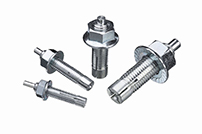
Molabolt achieves SCI AssessedSCI have recently completed a programme of test covering the shear resistance and tension resistance of Molabolt peg anchors, which are available in a range of sizes in carbon steel and stainless steel. Molabolts are intended for use as ‘blind’ fixings, to hollow sections or similar situations where access is only possible to one end of the fixing. Molabolts have a threaded shank with an internal bore. A shaped central peg which fits inside the central bore is used to splay out quadrants at the ‘blind’ end of the fixing. Once the end of the fixing is deformed, the nut can be tightened and the connection completed. |
 |
||||
SCI PeopleIntroducing Professor Mark Lawson, Consultant, SCI
Mark completed his doctorate in the field of stressed skin design. He worked for Ove Arup and Partners in building and offshore technology groups and joined CIRIA as Research Manager for Building Engineering. He took a sabbatical at the Swiss Federal Institute of Technology, Lausanne, working on aspects of composite construction. |
|
||||
SCI Publications |
|||||
 |
 |
 |
|||
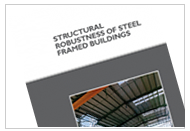
Structural robustness of steel framed buildings (P391)This publication provides design guidance for hot rolled steel framed buildings on the Eurocode strategies for structural robustness and designing for the avoidance of disproportionate collapse as required by the UK Building Regulations. (Published 2011). |
Avoidance of thermal bridging in steel construction (P380) This publication provides an introduction to thermal bridging, an explanation of the consequences of thermal bridging (local heat loss and the possibility of condensation), and describes how these effects are considered in building regulations. (Published 2008). |
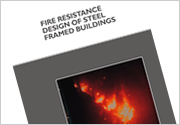
Fire resistance design of steel framed buildings (P375) This design guide provides a general overview of the fire design of steel and composite structures in accordance with the Eurocodes, introduces the basis of design for fire situations and the criteria that need to be met. (Published 2012). |
|||
|
|
|
|||

SCI Members in the News
Fusion/Wilmott Dixon Film – Sunesis school built in 2 minutes
Watch the team build a Sunesis Dewey model in just over two minutes for Croydon Council.
Fastest Sunesis School completed so far. Completed in just 39 weeks.
You can see the full video here
SEND YOUR NEWS |


SCI New Members
SCI would like to welcome the following new members:

Twitter Suggestion
For course reminders, publication updates and article notifications follow SCI on Twitter.
Connect Sign Up |
Refer a friend or collegue who you think may be interested in receiving the SCI Connect Newsletter |
| CLICK TO REGISTER |