|
Although we ended 2020 effectively in National lockdown (however the Government may have described it), I expect I was not alone in failing to anticipate that at the end of 2021 we would still be navigating troubled waters. At SCI the pandemic has not been our only worry - the last of our European funded research projects is coming to a close as a very real impact of BREXIT hits us, and fallout from the Grenfell tragedy has been slowing our ability to offer product certification. But despite these challenges, our financial year ending March 2021 was profitable, and we continue to be valued by our members and clients, as some highlights below confirm.
Our project highlights included the publication of AISC 370 - the first US design standard for structural stainless steel. This was written over a three year period, with SCI taking a lead on the development of the design rules. The year also saw the successful completion of the European collaborative project STROBE, which has resulted in design rules for high strength steels based on both laboratory tests and numerical analysis. Our global recognition is also seen in work we have undertaken for our long standing client Blind Bolt - over many years we have conducted test programmes, analysed the results and prepared design resistances for use in the UK, Europe and North America. December saw the delivery of a 'good working draft' for a CEN Technical Specification on twin and single skin composite construction. This was developed by a team lead by SCI, and will lead to rules that national standards bodies can 'authorise' to supplement Eurocode 4.
Many readers will be aware of certain issues concerning the design of steelwork joints, associated with information transfer, responsibilities, and joints that are so unusual it makes sanity checking of software output difficult, if not impossible. Late in 2021 SCI convened a meeting of various stakeholders, where some specific technical issues were identified (notably that code-type guidance is needed for complex joints subject to complicated loading, and for bases, where the design of the steel and foundation should be integrated). The most important outcome was agreement that an industry standard for the communication of connection design information should be developed.
For several years now our Light Steel Forum has proven to be a useful vehicle for identifying and funding guidance that is needed. Our publication P424 reviews fire design, and provides an authoritative way of extrapolating the results from load bearing fire tests so they can be correctly applied to a given design situation. We have developed a TEDDs module that makes application of this method quick, reliable and efficient (it can be purchased here ). Work is currently progressing on guidance for assuring the stability of light steel framing. Following requests from manufacturers, we are investigating if a similar group would benefit the particular needs of offsite volumetric and panelised systems.
In November we were very pleased to welcome over 200 delegates to our (virtual) Annual Event. A key theme of 'sustainability' was deliberately chosen as the event coincided with COP26, and it was motivating to hear what some organisations are already doing, what steel producers are planning (SCI were commissioned by BCSA to produce a roadmap, which identifies numerous and diverse ways to achieve decarbonisation by 2050), and what we as engineers can do. Attendees also heard that next year we will be releasing guidance and tools aimed at helping designers use less material through more sophisticated methods.
We were also very pleased to extend our engineering capability in 2021, Dr Bogdan Balan bringing useful specialist experience of the software sector, and Dr Socrates Angelidis a wealth of knowledge gained at two old 'friends' of SCI, Imperial College London and the University of Cambridge.
So to close I wish all readers a happy and healthy Christmas break, and a successful 2022.
|
|
|
|
|
 |
Welding Technology - what designers need to know.
Pt 1
11 Jan
12:30-13:30
|
|
|
Light Gauge Steel Design Online Course
18, 20, 24 Jan
12:30-13:30
|
|
|
Online EC4 Composite Design Course
9, 10, 16, 17 Feb
10:00-12:00
|
|
|
Welding Technology - what designers need to know.
Pt 2
15 Feb
12:30-13:30
|
|
|
View all courses
|
|
|
| SCI expertise on site
|
|
The majority of SCI's work is generally office based, however, not entirely and earlier this month three members of the SCI engineering staff were on site to inspect steelwork on a multi-storey residential building which was undergoing renovation work. Attending site were Andrew Way (Associate Director) and two younger SCI engineers, Costas Kyprianou and Callum Heavens. Following the site inspection, SCI were able to produce a report for the client based on what had been observed on site and their follow-up calculations to determine structural resistances. The site visit was beneficial all round as the client attained what they needed and younger members of SCI staff gained practical experience of steel construction.

Andrew Way (Associate Director) and two younger SCI engineers, Costas Kyprianou and Callum Heavens
|

|
| SCI assessment news
|
|
Over the last few months several companies have gained the SCI/NHBC Stage 1 System Certification for light steel frame structural systems in accordance with the NHBC Standards Chapter 6.10.
The most recent companies to be awarded the certification are:
- Rapidwall Ltd - A light steel frame system for walls and floors of residential dwellings up to 4 storeys high.
- Saint-Gobain, IntraSTACK Light Steel Frame System - A light steel frame system for walls and floors of residential dwellings up to 15 storeys high.
- FrameForm Steel Systems Limited - A light steel frame system for walls and floors of residential dwellings up to 10 storeys high.
SCI provide separate Stage 1 Certificates for NHBC, LABC Warranty and Premier Guarantee in accordance with their respective technical manuals or standards.
Please contact assessment@steel-sci.com for further information.
|

|
| AISC Publishes New Stainless Steel Design Standard
|
|
AISC (American Institute of Steel Construction) has published a new stainless steel design standard.
ANSI/AISC 370-21 Specification for Structural Stainless Steel Buildings is available to download free of charge at Current Standards | American Institute of Steel Construction (aisc.org) .
The availability of this eagerly anticipated standard will help engineers, materials specifiers and designers take full advantage of the outstanding properties of stainless steel in building, construction and large infrastructure projects, opening up new opportunities for growth in these sectors. The standard is significant because it is the first US specification for structural use of heavier gauge hot rolled and welded stainless steel sections. AISC standards are also used by structural engineers in many other global regions.
Nancy Baddoo and Francisco Meza of SCI, along with other US-based stainless steel experts, steel producers and product manufacturers worked closely with AISC over the last three years to develop this important new standard.

Two new AISC stainless steel standards published
|

|
| Members Advisory Desk Service email alerts.
|
|
The new Advisory Desk service emails sent this month included;
Advisory Desk Note - AD 390
Lateral torsional buckling of channels in accordance with
EN 1993-1-1
Advisory Desk Note - AD 478
Effective length of T-stubs - Corrections to
BS EN 1993-1-8 and P398
If you are an SCI Sole Trader or Corporate Member and not receiving these email alerts go to the SCI Information Portal and in your Profile click on notifications/alerts and select the notifications you require.
All the Advisory Desk Notes and Questions and Answers together with other technical resources are all available at all times on the SCI Information Portal.
|
 |
| SCI Advisory Questions and Answers
|
|
For SCI Sole Trader and Corporate members, SCI offers support through our Advisory Desk Service. For questions asked which we feel are pertinent to the wider member audience we publish anonymously the questions and answers.
Where some questions relate to SCI Publications we publish the question and answers in Connect.
This month our published question is about;
How much of a building requires fire protection
Question: Is it acceptable to treat elements differently in a structure where some have been found to require fire protection and others not, or should the whole structure be treated in the same way?
Answer: Fire protection can be provided element by element as appropriate for the required fire resistance period. For example, in compliant open-sided car parks, some elements may require no fire protection as the fire
resistance period is 15 minutes. Structure protecting
escape routes has a 30 minute fire resistance period
and may therefore require fire protection. (See Approved
Document B Volume 2, 2019 edition, Table B4 Minimum
periods of fire protection).
For all other membership Advisory Question /Answers please visit the the SCI Information Portal.
The Advisory Desk Service is for SCI Corporate and Sole Trader Members
advisory@steel-sci.com | +44 (0) 1344 636525
|
|
| SCI Courses, Webinars and Events
|
|
SCI Online Training Courses
Our public courses and webinars keep engineers updated with the latest developments within steel design and equip them to design competently, efficiently and safely.
|
|
|
Light Gauge Steel Design. Online Course - 3 sessions.
Part 1 - 18 January 22
Part 2 - 20 January 22
Part 3 - 24 January 22
It introduces the uses and applications of light gauge steel in construction, before explaining in detail the methods employed by Eurocode 3 for designing light gauge steel members in bending and compression and calculation of section properties. Specific design issues related to the different uses of light gauge steel are addressed.
For light steel framing the issues covered include: frame stability, bracing, designing for robustness, connection design, frame anchorage and serviceability conditions.
For industrial building applications the issues covered include: specification with load tables, rafter and column restraint and load reversal (uplift) conditions.
Other specific topics that are covered include: fire resistance, acoustic performance, NHBC Standards Chapter 6.10 and durability.
The subjects are illustrated through a series of example calculations throughout the course.
Who should attend:
All practicing engineers who would like to learn the essential principles of light gauge steel design in its typical structural applications.
The course is ideal for:
- Engineers with no previous experience in light gauge steel design;
- Engineers who require a refresher in light gauge steel design;
- Engineers looking for a broader understanding of light gauge steel design.
Member Rate: £250.00 +VAT
Non Member Rate: £330.00 +VAT
To attend thise register here
|
 |
|
Next SCI Member webinar is;
Welding Technology - What Designers Need to Know Webinar - Part 1
11 January 22
Time: 12:30-13:30
The webinar will cover basic welding technology and provide an overview of the techniques to minimise the risk of defects in the welds. Although this is the job of the Responsible Welding Coordinator (RWC), the webinar will cover the identification of higher risk situations and what to look for when reviewing weld procedure specifications.
Register for this event here
|
|
|
|
|
|
|
SCI Publications
Our bookshop is once again open. For any hard copies of SCI Publications visit the SCI WebShop.
|
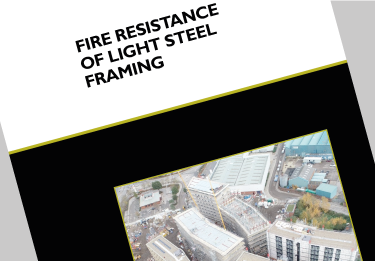
Fire Resistance of Light Steel Framing (P424)
This publication provides guidance on how light steel framed buildings should be designed and detailed to provide fire resistance in accordance with the Building Regulations. The guidance addresses the criteria that need to be considered and explains how these can be achieved with light steel framing. Published On: 23 February 2021.
|

Design Manual for Structural Stainless Steel 4th Edition (P413)
This Design Manual gives design rules for austenitic, duplex and ferritic stainless steels. The rules are aligned to the 2015 amendment of the Eurocode for structural stainless steel, EN 1993-1-4. Guidance on grade selection, durability and fabrication is also provided. Fifteen design examples are included which illustrate the application of the design rules.
Free Download
|
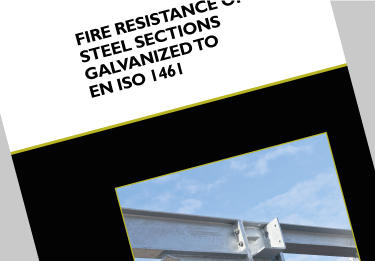
Fire Resistance of Steel Sections Galvanized to EN ISO 1461 (P429)
This new design guide provides tables to calculate fire resistances and maximum fire exposure periods for galvanized steel beams, composite beams, columns, and plates in tension, according to the Eurocodes and the UK and Irish National Annexes. Design tables in accordance with BS 5950 are also provided.
Free Download
|
|
|
|
|
|
|
|
SCI on Social Media
For course reminders, publication updates and article notifications follow SCI on Twitter, Instagram and LinkedIn.
|
|
|
|
|
|
Refer a friend or colleague who you think may be interested in receiving the SCI Connect Newsletter
|
|
|
CLICK TO REGISTER
|
|
|
|
|
© 2021. This newsletter has been published by The Steel Construction Institute |
Terms
Privacy Policy
|
|
The Steel Construction Institute, Silwood Park, Ascot. SL5 7QN.
Registered in England and Wales. Registered No: 1916698.
Click here to unsubscribe
|
|
